If your child has been asking to learn piano, or you have noticed them gravitating toward music, you may be wondering where to begin. Finding the right piano lessons in The Woodlands, TX, involves more than choosing a convenient schedule. The teaching approach, the instructor, and the learning environment can all influence how your child experiences music.
Piano is often a great instrument for beginners because its keyboard makes musical concepts easier to explore. Children can see how notes move, experiment with melodies, and gradually learn to play with both hands. With the right guidance, those first lessons can become the beginning of a rewarding musical experience.
If you’re considering piano lessons for your child, here are some things worth knowing before making a decision.
Why Is Piano a Good Instrument for Children to Learn?
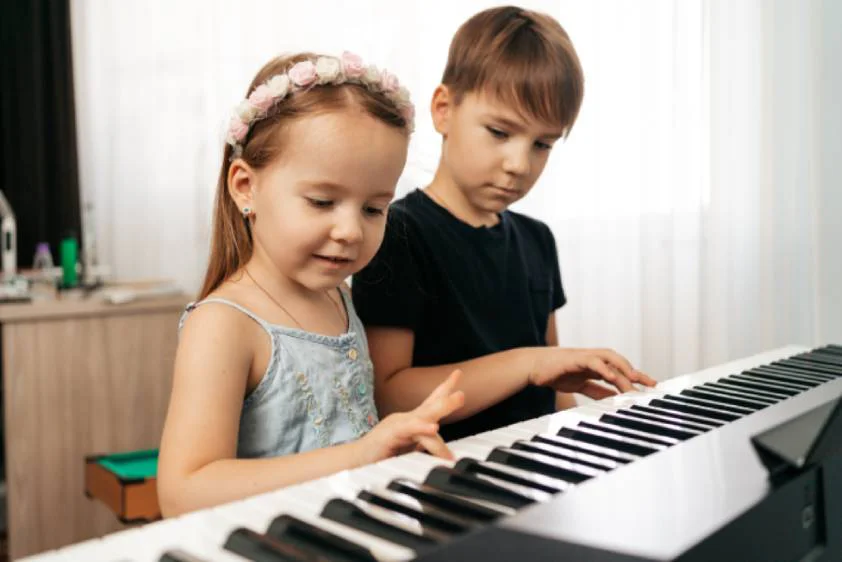
The piano gives children a practical way to explore music from the very beginning. Even during their first lessons, they can play simple melodies and begin understanding how sounds relate to one another.
If your child is interested in music but hasn’t decided which instrument to learn, our article Piano or Guitar: Which Instrument Should My Child Learn First? can help you compare two popular options for beginners.
As they progress, students develop several skills that become part of their musical foundation:
- Understanding music: Children begin learning notes, rhythms, melodies, and musical patterns.
- Hand coordination: Playing the piano encourages children to coordinate their fingers and gradually use both hands together.
- Listening skills: Students learn to recognize pitches, rhythms, and differences in musical expression.
- Concentration: Learning a song requires attention, repetition, and the ability to work through small challenges.
- Creativity: As children become more comfortable with the instrument, they can explore different musical styles and begin expressing themselves through music.
These skills develop gradually. A beginner may initially focus on finding the correct notes or keeping a steady rhythm, while more experienced students begin combining those skills to play increasingly complex pieces.
When Should a Child Start Piano Lessons?
Parents often wonder whether their child is too young to begin piano lessons or whether they should wait another year. There isn’t a single age that works for everyone, since children develop musical readiness at different times.
If you’re trying to determine when your child should begin learning music, our guide What Is the Best Age to Start Music Lessons? explores how different stages of development can influence a child’s musical journey.
Younger children may benefit from programs that introduce music through singing, movement, listening activities, games, and simple musical concepts. As they develop their coordination and attention span, they can gradually transition into more structured piano instruction.
A child’s interest is also worth paying attention to. If they enjoy listening to music, experimenting with sounds, or asking questions about instruments, those interests can be a good starting point.
The teaching approach should match the child’s stage of development, rather than expecting every student to follow the same pace.
What Should Parents Look for in Piano Lessons?
When comparing piano programs in The Woodlands, it helps to look beyond the instrument and the class schedule. The way children are taught can make a significant difference in their experience.
A teacher who knows how to work with children
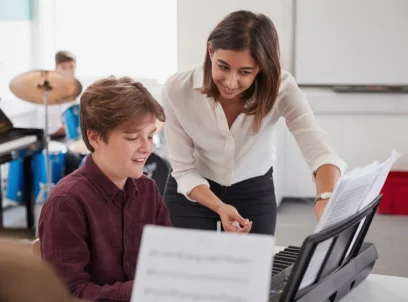
Teaching piano to children requires patience and an ability to explain musical ideas in ways they can understand. A teacher needs to recognize when a student is ready for a new challenge and when a little more practice or encouragement is needed.
Finding an instructor who understands how children learn is an important part of choosing a music program. Our article How to Choose the Right Music Teacher for Your Child explains what parents should look for when evaluating a music teacher.
For example, a child who struggles with a particular song may benefit from breaking it into smaller sections rather than repeating the entire piece until they get it right. That kind of guidance helps students understand how to approach challenges as they learn.
A clear learning progression
Children need a learning path that introduces new skills gradually. A structured program helps them build on what they’ve already learned, so they can develop confidence and avoid feeling overwhelmed.
When evaluating a music school, ask how lessons are organized, what students learn at different stages, and how teachers help them progress. Understanding the school’s educational approach can help you determine whether it fits your child’s needs.
Lessons that keep children interested
A child who enjoys their lessons is more likely to look forward to returning each week. Music should be engaging, and the songs and activities used during instruction can influence how motivated students feel.
This doesn’t mean every lesson needs to be a game. Children also benefit from learning to work through challenges, but a good teacher knows how to balance practice, progress, and enjoyment.
Opportunities to perform
Recitals give students the chance to share what they’ve been learning with family and friends. For many children, preparing for a performance helps them set goals and become more comfortable playing in front of others.
Not every student will feel confident on stage right away, and that’s perfectly normal. These experiences allow children to gradually become familiar with performing while celebrating their progress along the way.
Communication with parents
Parents should have a clear understanding of what their children are learning and what is expected between lessons. Knowing which songs to practice, how much time to dedicate to the instrument, and what progress to expect helps families support the learning process at home.
Good communication also makes it easier to discuss concerns, adjust expectations, or celebrate accomplishments together.
How Often Should Children Practice Piano?
Practice is an important part of learning piano, but establishing a routine can sometimes be challenging for families. Between school, homework, sports, and other activities, finding time for music requires some planning.
For beginners, shorter and consistent practice sessions are often easier to maintain than long sessions that happen only occasionally. A child may spend time reviewing a song, working on a particular section, or practicing a skill introduced during the previous lesson.
Parents can help by creating a comfortable place to practice and establishing a routine that fits their child’s schedule. They don’t necessarily need to supervise every minute, but checking in, listening to a song, or acknowledging the effort can make practice feel more encouraging.
Some days will go better than others. What matters is gradually developing a habit that allows children to improve without turning music into another source of pressure.
How Do You Choose a Piano School Near The Woodlands?
If you’re looking for piano lessons in The Woodlands or nearby communities, take some time to understand what each school offers.
You may want to ask about the qualifications and experience of the instructors, the teaching method, lesson formats, performance opportunities, and how the school works with students who are just beginning.
It’s also worth considering the overall environment. A music school where children feel comfortable, where teachers know their students, and where progress is encouraged can make the experience more enjoyable for the entire family.
Visiting the school or speaking with its staff can help you get a better idea of what lessons are like and whether the program fits your child’s interests.
Piano Lessons at Teora Music School
For families in The Woodlands looking for piano instruction for their children, Teora Music School offers a music education environment focused on helping students develop their musical skills and enjoy the learning process.
As an Authorized Yamaha Music School, Teora follows a structured approach to music education designed to help students build a strong musical foundation as they progress.
Our instructors work with students at different stages of their musical journey, helping them develop their abilities while encouraging curiosity, creativity, and confidence.
Whether your child is picking up a piano for the first time or already has some experience, finding the right program can help them make the most of their interest in music.
Looking for Piano Lessons for Your Child in The Woodlands?
If you’re exploring piano lessons for your child, we’d be happy to help you learn more about the programs available at Teora Music School.
Contact Teora Music School to request information about our piano lessons and find out how your child can get started.
We look forward to helping your family explore the possibilities of music education.
📍 Proudly serving families in Tomball, The Woodlands, Spring, Klein, Magnolia, Cypress, and surrounding communities.
Discovering the Musician in You…!!!